
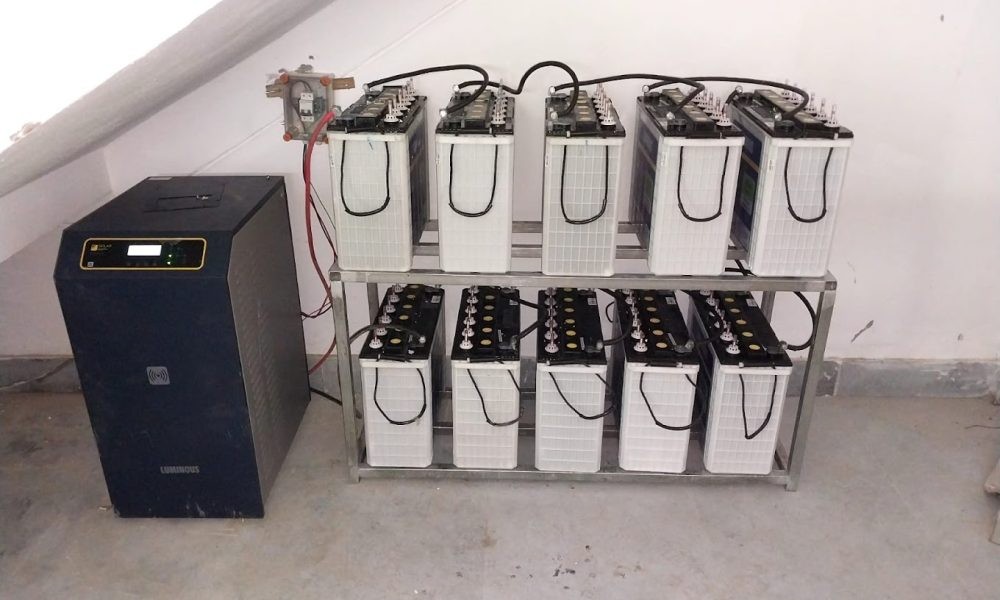

Power cuts may not be as frequent as before, but they still affect many parts of India because of excessive load, fuse failure at the transformer, maintenance, higher demand, and many other reasons. Due to these reasons alone, India is one of the largest markets for home inverters and battery systems. More than 50 million Indian households use inverter batteries as per industry estimates.
Inverters alone cost around 5,000 rupees, and the battery costs around 9,000 rupees to 20,000 rupees. The price difference is all about capacity, technology, brand, warranty, and after-sales services. Most people think that this is all they are paying for an interruption-free life, but they are somewhat incorrect here. Over the lifetime of the inverter and battery, there are additional costs like maintenance, electricity for charging, and replacement of the battery.
If you want to understand the true cost of inverter battery life-cycle, paying close attention to every small expense may help in getting an estimated amount.
Let’s begin and understand how to calculate the true cost –
Most Indian households use a 150Ah capacity inverter battery, which can offer several hours of backup for basic applications. Three types of inverter batteries are available in the Indian market, and each one is available at a different price point. Here is a simplified price comparison for each type:
- Flat plate battery: Rs. 8,000 to Rs. 12,000
- Tubular Battery (150 Ah): Rs. 9,000 to Rs. 23,000
- Lithium-ion Battery: Rs. 25,000 to Rs. 54,000
Tubular batteries are common because they offer affordable pricing, durability, and an excellent backup capacity. This may seem like a manageable expense, but it is still the first stage of the cost of inverter battery in its life-cycle.
As we learned about the cost of inverter batteries for different technologies, the lifespan of the battery also depends on the technology. As per studies and industry estimates, the following are the typical lifespans for each type of battery.
- Stand Lead-acid batteries last for 3-5 years.
- Tubular batteries generally offer 4-6 years or even longer with proper care.
- Lithium-ion inverter batteries may last more than 10 years, but the typical lifespan is 7-10 years.
With the improvement in tubular batteries, many tubular batteries can achieve 1800-2200 charge-discharge cycles.
When you buy a new inverter battery, you consider the capacity based on what backup you need and how much load you want to put on it. In most parts of India, the power cuts are shorter than 5 hours, and these are also less frequent. Due to this reason alone, most people opt for a 150 Ah battery capacity because it can offer 5-6 hours of backup on a 300-watt load. The typical home backup load includes:
- LED Lights (6 watts to 20 watts)
- Ceiling Fans (35 watts for BLDC fan and up to 85 watts for normal ceiling fan)
- Television (80-120 watts, depending upon technology, brand, and size)
- Wi-Fi Router (10-15 watts)
Choosing the right battery capacity is important as it is a big upfront expense, and it saves you from future costs. Overloading the inverter and battery results in faster degradation of the battery, which eventually reduces the lifespan of the battery.
Now, coming to the usage cost of inverter battery, efficiency is the first thing you need to learn. When an inverter charges a battery, it is not 100% efficient and wastes some electricity in the charging process. Lead-acid inverter batteries usually operate with around 80% energy efficiency, which means that 20% of electricity is lost as heat during charging. Let’s understand with an example:
- If the battery stores 1 kWh of energy, the inverter may need about 1.2-1.25 kWh of electricity to recharge it.
- The inverter will take a few hours to fully charge it. Once there is a power loss, the inverter will supply the backup electricity to your house.
- Each time, you are less likely to empty the battery juice, so there will be less energy wasted in charging.
- However, the battery loses its charge when not used, and it will charge automatically.
Your inverter also consumes some electricity that might seem negligible, but it is still a reasonable cost to consider.
Lead-Acid batteries require regular maintenance to operate efficiently, whereas the tubular batteries typically need distilled water topping every two to three months for proper electrolyte levels. The common maintenance activities include:
- Checking water levels
- Cleaning battery terminals
- Ensuring proper ventilation
- Inspecting cables and connections
Even though the cost for topping distilled water is negligible, it is a recurring expense that contributes to the overall life-cycle cost. Maintenance-free and lithium batteries reduce the effort, but then you have to bear a high upfront cost.
A higher battery lifespan helps in reducing the long-term cost of using an inverter battery. Choosing a good battery and maintaining it properly ensures a lower life-cycle owning cost of inverter battery. However, some factors are hard to control, which include heat, humidity, and poor ventilation.
When the battery heats, its efficiency takes a big hit. Research and industry observation show that high temperatures accelerate battery degradation, while also reducing efficiency and lifespan. Meanwhile, the other factors are:
- Frequent deep discharge due to excessive load or long power cuts.
- Overcharging or undercharging the battery due to a faulty inverter
- Overloading the inverter system, even if you do it by mistake
- Poor maintenance practices and corrosion on battery terminals
Some factors are easy to control through proper maintenance, whereas others are not directly possible. But, trying to keep the battery in a less humid region with better ventilation has always worked, even in peak summer months.
The replacement period varies based on the type of battery you choose, so you will likely need more replacements with a flat battery as compared to tubular or lithium-ion in the first ten years. As most households use tubular batteries, we are considering a tubular inverter battery for replacement cost over 10 years.
Considering that you have used a tubular battery with decent maintenance, you will get at least 5 years of juice out of it. So, the average cost will be 30,000 rupees for the first ten years, where the inverter price, electricity cost, and maintenance are not included.
Bottom Line
The true cost of inverter battery for the first ten years is around 30K for the battery, and an extra 2000 rupees for maintenance and charging. Tubular batteries offer the best value for your money, and they can offer way more performance if you maintain them properly.