
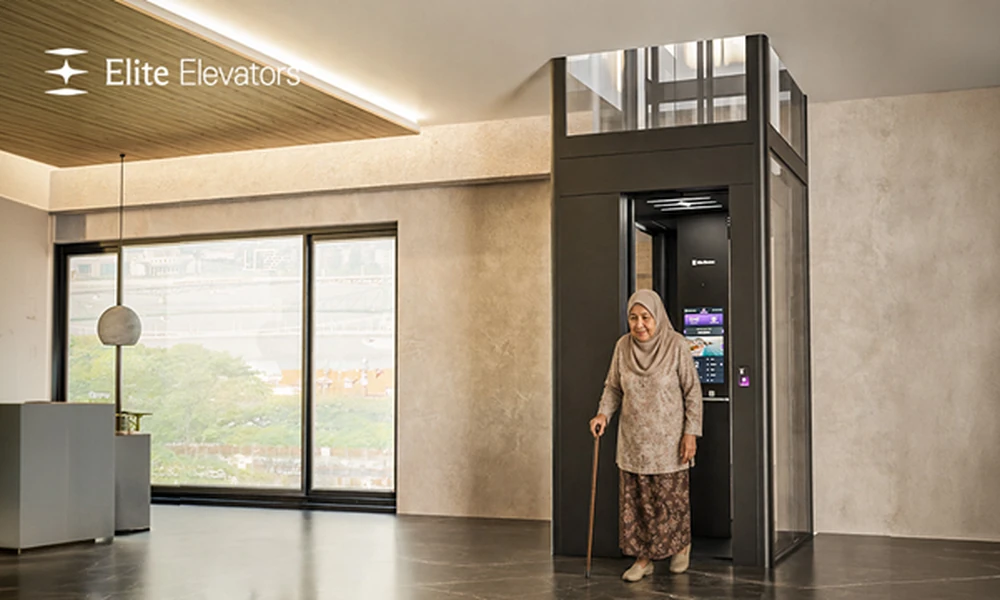

Home elevator design has evolved considerably in recent years, moving well beyond simple vertical transport into genuinely intelligent, design-conscious systems. Understanding what defines modern home elevators in their current form helps buyers separate meaningful advances from surface-level marketing language.
The pace of change has been driven largely by two parallel trends: growing demand for smart home integration across every part of the household, and a shift toward viewing a lift as a design feature rather than a purely functional addition. Both trends have shaped what “modern” genuinely means in this category today.
What Defines a Modern Home Elevator?
Smart connectivity: App-based control, remote diagnostics, and personalised settings have become standard expectations rather than premium extras.
Refined, design-conscious aesthetics: Glass panels, curated colour palettes, and finish options designed to integrate with contemporary interiors, rather than looking like a purely mechanical addition.
Compact, flexible installation: Pit-free and machine-room-free engineering has expanded where a lift can realistically be installed, a genuinely significant shift from older generations of equipment.
Multiple ride modes: The ability to adjust speed, responsiveness, and ambience based on preference or occasion, rather than a single fixed setting.
Enhanced safety monitoring; Remote diagnostics and sensor-based systems that can flag potential issues before they become genuine faults.
The Latest Smart Home Elevator Technology
AI-assisted operation: Some current systems can learn usage patterns and anticipate destination floors, reducing the need for manual input altogether.
Biometric access: Fingerprint-based entry and floor access is increasingly common, adding both convenience and an additional security layer.
Built-in cabin cameras; Wide-angle monitoring adds a further layer of security and peace of mind, particularly for households with elderly residents or young children.
Interactive displays: Touch-based cabin screens now commonly offer more than basic controls, incorporating personalisation, information display, and even entertainment features.
Voice and app integration: Controlling lighting, fan speed, and floor selection remotely has moved from a novelty to an expected feature in the smart home elevator category.
Comparing Older Generations to Current Smart Home Elevator Technology
| Feature | Previous Generation | Current Generation |
| Controls | Basic button panel | Touch, app, and sometimes voice-based |
| Access | Physical key or PIN | Biometric and PIN options |
| Monitoring | Manual servicing only | Remote diagnostics and alerts |
| Personalisation | Minimal | Extensive, including custom modes and displays |
| Installation footprint | Pit and machine room typically required | Increasingly pit-free and machine-room-free |
How Design Aesthetics Have Shifted
Beyond the technology itself, the visual approach to home elevators has changed considerably. Where older lifts were often treated as a purely functional necessity, tucked away and minimally finished, current models are increasingly designed as a genuine architectural feature. Glass cabin walls, integrated LED lighting, and curated colour ranges reflect a broader trend of homeowners wanting every element of their home, including a lift, to contribute to the overall interior design rather than simply blend into the background or be hidden away.
Are Smart Features Worth the Investment?
Not every smart feature delivers equal long-term value, and it’s worth distinguishing between genuinely useful additions and those that add complexity without much practical benefit. Remote diagnostics, for instance, offer real value by catching issues early. A highly elaborate entertainment display, while impressive, may see far less regular use once the initial novelty passes. Buyers benefit from thinking honestly about daily usage patterns rather than choosing purely based on which features felt most impressive during a showroom demonstration.
Elite Elevators’ Current Smart Feature Range
Elite Elevators’X400 Mark II represents much of this current-generation shift in a single model, combining Elite AI destination prediction, a 21-inch interactive Live Board display, biometric access, and a built-in wide-angle cabin camera (VisionLog), alongside certification to EN 81-20 and EN 81-50. The base X400 shares the same gearless drive system and multi-mode ride experience without the additional smart layer, illustrating how the current generation of home lifts now offers genuine tiers of technological sophistication rather than a single fixed feature set.
What Should Buyers Prioritise When Comparing Modern Options?
- Genuine daily usefulness over novelty: Consider which smart features will actually be used regularly, not just admired initially.
- Certification alongside smart functionality: Advanced features shouldn’t come at the expense of confirmed safety compliance.
- Design longevity: Aesthetic choices should hold appeal well beyond current trends, given how long a lift typically remains in use.
- Installation flexibility: Confirm whether the chosen model’s compact footprint genuinely suits your specific property.
- Update and support pathways: Ask how software-based features are maintained or updated over the lift’s lifespan.
Common Mistakes When Choosing a Modern Home Elevator
Choosing based on the most feature-dense option available: More features aren’t automatically better if they don’t align with actual daily needs.
Overlooking installation footprint requirements: Even the most advanced smart features don’t matter if the model doesn’t physically suit the property.
Assuming all “smart” branding reflects equal technological depth: Genuine AI-assisted functionality differs considerably from basic app connectivity marketed similarly.
Not considering long-term design appeal: Highly trend-driven finishes may feel dated sooner than more considered, timeless choices.
Conclusion
Modern home elevators in their current form combine genuine technological advances – AI-assisted operation, biometric access, and remote diagnostics – with a design-conscious approach that treats the lift as a meaningful part of the home’s overall aesthetic, not just a mechanical necessity. Understanding which of these advances genuinely add daily value, rather than choosing purely on feature count, will lead to a far more satisfying long-term outcome for anyone comparing today’s luxury home elevators and their smart capabilities.
Frequently Asked Questions
1. What makes a home elevator “modern” today?
Smart connectivity, design-conscious aesthetics, compact installation, and enhanced safety monitoring together define current-generation home elevators.
2. Is AI-assisted operation genuinely useful in a home elevator?
It can be, particularly for destination prediction and usage pattern learning, though its value depends on how the household actually uses the lift daily.
3. Are smart home elevator features difficult to maintain?
Not typically, though it’s worth asking how software-based features are supported and updated over the lift’s lifespan.
4. Do modern home elevators require more maintenance than older models?
Not necessarily; many modern features, like remote diagnostics, are specifically designed to reduce maintenance issues by catching problems early.
5. What smart features are most worth prioritising?
Features with genuine daily usefulness, such as remote diagnostics and app-based control, generally offer more long-term value than purely decorative additions.
6. How has home elevator design changed in recent years?
Design has shifted from purely functional installations toward architectural features with curated finishes, glass panels, and integrated lighting designed to complement home interiors.