
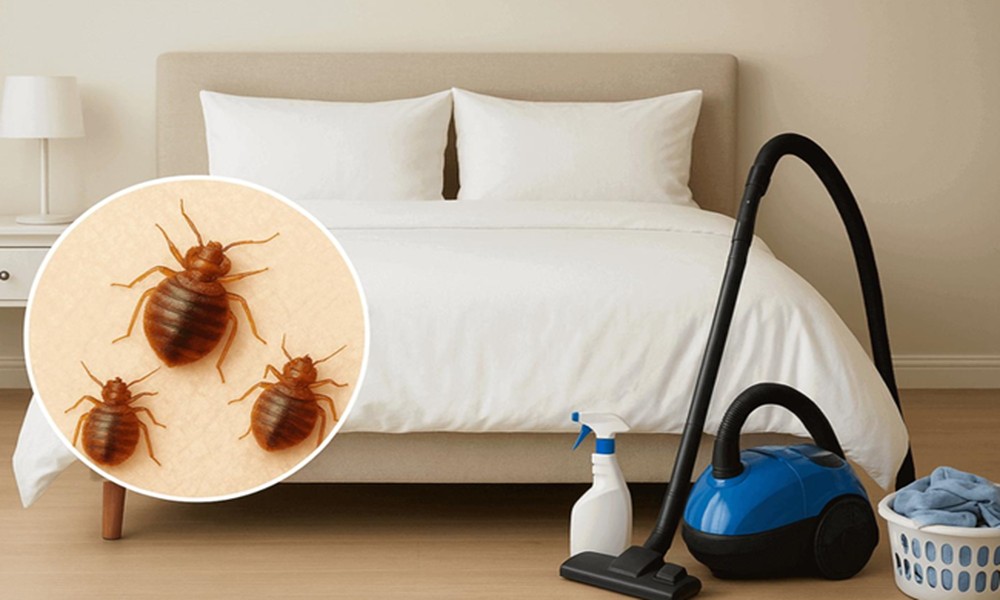

Bed bugs in a Kansas City apartment are an unusually bad problem to inherit because the legal framework for dealing with them in Missouri is weaker than most tenants assume, and the DIY products sold to handle them mostly do not work. The combination pushes infestations from a one-unit problem into a building-wide one faster than any other residential pest. Kansas City pest control firms that handle a lot of multi-family work, including long-established operators like ZipZap Termite & Pest Control in Lawson, see the same pattern month after month: a tenant discovers bites, buys sprays at the hardware store, treats for weeks with no result, and eventually learns that most of what they assumed about landlord obligations and effective treatment is incorrect. Knowing what is actually true about both is the difference between a three-week problem and a six-month one.
Why Bed Bugs Spread So Aggressively in Apartment Buildings
The bed bug (Cimex lectularius) is one of the most efficient hitchhikers in the urban pest ecosystem. An adult can live more than a year without feeding, can travel through wall voids and electrical outlets into adjacent units, and can be transported on clothing, furniture, and luggage without any sign of infestation in the source location.
Multi-family buildings amplify that biology. A single untreated unit can seed neighboring units within weeks, and the population typically builds invisibly for months before anyone sees a live bug. By the time one tenant reports bites, three or four surrounding units usually have detectable activity even if their occupants have not noticed.
Kansas City’s mix of older apartment stock in the urban core, student and short-term rentals near UMKC and Crown Center, and travel-heavy zip codes near the airport and downtown hotels creates steady introduction pressure. Infestations are not a marker of cleanliness. Bed bugs establish readily in immaculate units.
Missouri Landlord-Tenant Law on Bed Bugs, Honestly
Missouri does not have a state statute specifically addressing bed bug responsibility between landlords and tenants, and Kansas City’s municipal code does not impose the detailed bed bug ordinance that cities like New York, Chicago, or Las Vegas have passed.
Tenants still have rights, but they come from general habitability law rather than bed bug-specific rules. The implied warranty of habitability, recognized in Missouri case law, generally requires a rental unit to be fit for human occupancy, and a severe bed bug infestation in a common building system typically qualifies. A landlord who ignores a documented, widespread infestation in the building envelope can face habitability claims. A landlord who treats promptly in response to a single reported unit usually does not.
Practical implications for Kansas City tenants:
- Report infestations in writing (email or certified letter) and keep the records. Verbal reports rarely hold up in later disputes.
- Document the timeline of the complaint, the landlord’s response, and any treatments attempted.
- Understand that lease language often assigns responsibility based on how long a tenant has occupied the unit. A tenant who reports bugs in the first 30 days typically has stronger footing than one who reports after a year.
- If the landlord is unresponsive, Kansas City’s Healthy Homes Rental Inspection Program and the city’s 311 non-emergency line can document the condition, though enforcement varies.
Tenants facing eviction threats or deposit disputes related to bed bug complaints should contact Legal Aid of Western Missouri for case-specific advice. The information above is general and not a substitute for legal counsel.
Why Store-Bought Sprays Do Not Work
Most retail bed bug products are pyrethroid-based, and widespread pyrethroid resistance in bed bug populations has been documented in peer-reviewed studies for more than a decade. A 2017 study in the Journal of Economic Entomology tested field-collected bed bugs against bifenthrin, deltamethrin, and similar compounds and found minimal mortality at label rates. The University of Kentucky’s entomology extension program, which has produced some of the most cited bed bug resistance research in the country, reaches the same conclusion.
Spraying bed bugs with ineffective products does something worse than nothing. It scatters the population into wall voids and adjacent units, making the infestation harder to treat and more likely to spread. A tenant who has been treating with sprays for three weeks has often made the problem worse.
Foggers (“bug bombs”) are specifically counterproductive and are not recommended by any credible entomological source for bed bug control.
What Actually Eliminates Bed Bugs
Professional Kansas City pest control for bed bugs typically combines two or three approaches.
Whole-room heat treatment raises the ambient temperature of a unit to roughly 118 to 122 degrees for several hours, reaching the thermal death point for all life stages including eggs. Heat penetrates wall voids and furniture in ways chemical treatments cannot, and a single properly executed treatment often resolves moderate infestations.
Targeted chemical treatment using non-pyrethroid modes of action (chlorfenapyr, neonicotinoids, insect growth regulators) applied to harborage zones handles cases where heat is impractical, usually combined with vacuuming, steam, and mattress encasements.
Canine inspection by a trained detection dog team is the most accurate method of locating active bed bugs in complex multi-family situations, and it is useful both for confirming treatment success and for identifying spread into adjacent units.
The National Pest Management Association’s Best Management Practices for Bed Bugs is the document most professional firms work from, and companies adhering to it, ZipZap Termite & Pest Control among them, follow defined protocols for inspection, treatment, follow-up, and tenant coordination.
What to Do Before a Treatment
Preparation matters. Laundering all clothing and linens on high heat, bagging non-washable items, reducing clutter to expose harborage areas, and pulling furniture away from walls all increase treatment success rates significantly. A pre-treatment sheet from the pest control provider should cover everything specifically.
The Short Version
Missouri’s bed bug law is thinner than tenants tend to assume, retail products are mostly ineffective and often counterproductive, and the realistic path to elimination is a coordinated professional treatment that combines heat, targeted chemistry, and follow-up inspection. For Kansas City renters navigating a landlord response, a call to a Kansas City pest control firm with multi-family experience, such as ZipZap Termite & Pest Control, usually produces a more useful inspection and report than any amount of continued self-treatment.