
Industrial Decarbonization: Why Developers are Replacing Electric Elements with Heat Pump Technology

In the global race toward net-zero emissions, the industrial sector finds itself at a critical crossroads. For decades, traditional electric immersion elements and gas-fired boilers were the standard for heating water in commercial and industrial settings. However, as sustainability mandates tighten and energy costs fluctuate, developers are shifting their focus toward a more sophisticated solution: Heat Pump Technology.
This transition isn’t merely a trend; it represents a fundamental change in how their projects approach energy density and carbon footprints. By moving away from resistive heating and embracing the physics of heat transfer, developers are redefining the efficiency of modern infrastructure.
The Efficiency Gap: Developers are Moving On
Traditional electric storage heaters operate on a 1:1 efficiency ratio, for every kilowatt of electricity consumed, one kilowatt of heat is produced. While effective, this creates a ceiling that prevents further decarbonization. Developers are now realizing that their energy goals require a “multiplier effect,” which is where heat pumps excel.
Heat pumps do not create heat; they move it. By extracting thermal energy from the ambient air and transferring it to water, these systems can achieve efficiencies of 300% to 400%. For a developer managing a large-scale industrial site or a high-rise commercial building, this means their operational energy consumption can be slashed by up to 75% compared to conventional electric elements.
Meeting ESG Goals and Regulatory Pressure
Environmental, Social, and Governance (ESG) criteria are no longer optional for modern developers. Financial institutions and stakeholders now scrutinize the “green” credentials of a project before committing capital. By integrating heat pump technology, developers can significantly lower the Scope 2 emissions of their buildings.
Furthermore, as many regions begin to phase out high-carbon heating methods, heat pumps provide a “future-proof” investment. Developers recognize that by installing this technology today, their properties remain compliant with evolving environmental regulations for decades to come, protecting the long-term value of the asset.
Space Optimization and Scalability
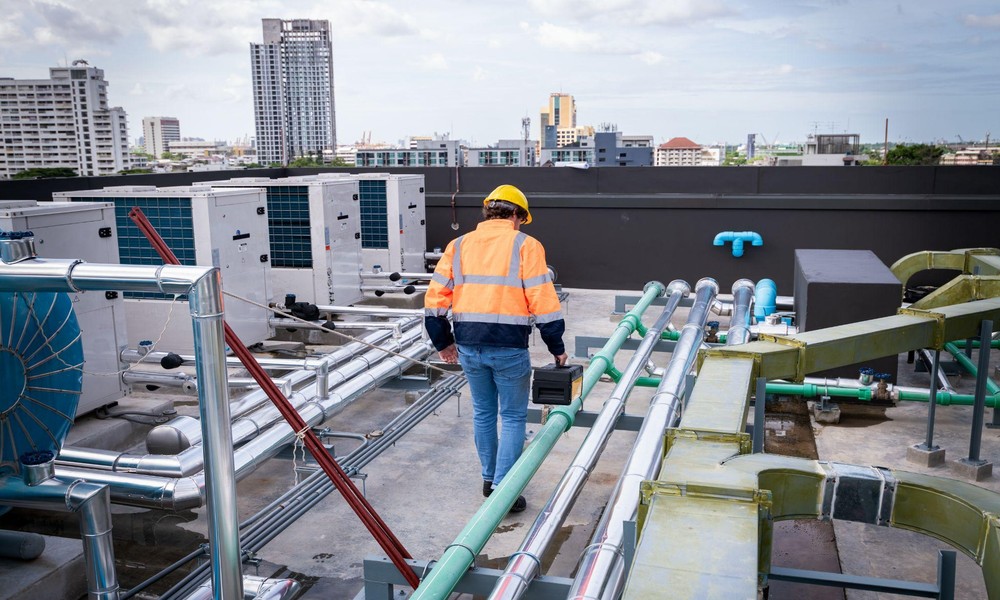
In the past, high-capacity water heating required massive footprints and specialized ventilation for gas combustion. Modern heat pump units are designed with modularity in mind. Developers appreciate how these systems can be installed in various configurations on rooftops or in mechanical rooms, freeing up valuable internal square footage for their primary business operations.
The Synergy of Rheem and Thermatrac
Rheem, a global pioneer in water heating with nearly a century of engineering heritage, has integrated the Thermatrac brand to spearhead its high-performance commercial heat pump division.
A standout solution for large-scale decarbonization is the Thermatrac TRV Series DC Inverter Heat Pump. This system is specifically engineered to handle the rigorous demands of commercial applications while delivering the massive energy savings that modern developers require. By utilizing ambient air temperature to heat water and employing advanced inverter technology, it offers a sustainable alternative to traditional boilers without compromising on the high-volume recovery rates essential for industrial use.
Whether it is for a luxury hotel, a hospital, or a manufacturing plant, Rheem provides the engineering excellence needed to transition away from high-energy electric elements toward a greener, more efficient future.
Are you prepared to steer your next project in the direction of a more sustainable future? Check out here to find your nearest Rheem authorized dealer to learn more.